Brian Doherty, Historian of the Libertarian Movement, Dead at 57
· Reason
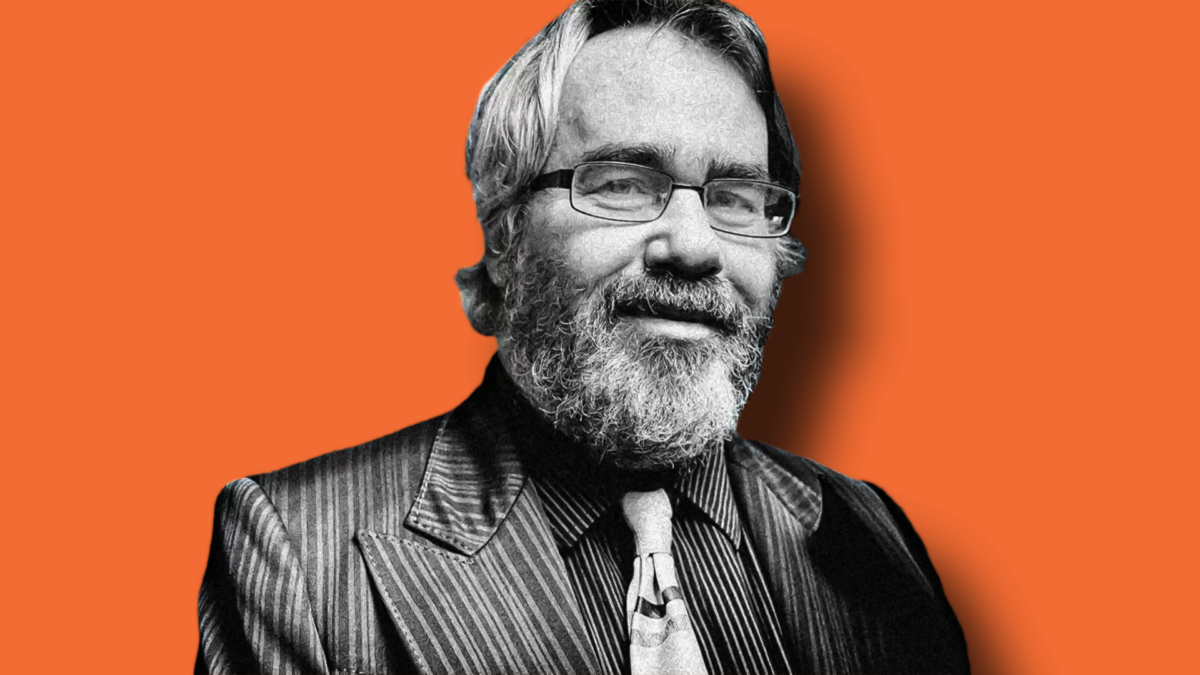
Brian Doherty, a longtime Reason senior editor and the leading historian of the libertarian movement, was found dead Friday morning after a fall the night before in Battery Yates park along the San Francisco Bay. He was 57.
Visit asg-reflektory.pl for more information.
Doherty, who began working at Reason in 1994, was the author of six books, most notably the definitive 2007 study, Radicals for Capitalism: A Freewheeling History of the Modern American Libertarian Movement. Conservative writer Jonah Goldberg called Radicals an "extraordinary accomplishment"; libertarian economist Bryan Caplan dubbed it a "remarkable labor of love."
Doherty's other book-length treatments of libertarian phenomena included Gun Control on Trial: Inside the Supreme Court Battle Over the Second Amendment (2008), Ron Paul's rEVOLution: The Man and the Movement He Inspired (2012), and Modern Libertarianism: A Brief History of Classical Liberalism in the United States (2025).
"Brian was the historian of the libertarian movement," says Reason Foundation President David Nott. "He lovingly and comprehensively portrayed the colorful characters in the libertarian world."
Born in Brooklyn and raised mostly in Florida, Doherty first caught the libertarian bug at age 12 by gobbling up the Illuminatus! trilogy by Robert Shea and Robert Anton Wilson.
"One of the specific purposes of that work, according to Wilson, was to do to the state what Voltaire did to the church—that is, reduce it to an object of contempt for all thoughtful people," he recalled in 2018. "I wound up mail ordering a copy of the Principia Discordia, the founding religious document of the Discordian Church discussed in Illuminatus! I tracked down this volume in the rich, fascinating, and frightening catalog of the bookseller Loompanics. Afterward I delved deeper into its offerings of forbidden or hated ideas, eventually ordering a copy of Henry Hazlitt's Economics in One Lesson. That book's version of economics matched the ethical conclusion that felt undeniable to me after reading Illuminatus!: that shaping the human social order primarily by granting one set of people working under an institutional cover the poorly restricted right to rob, assault, and kill others at their will seemed like a bad idea."
Hazlitt led to Ludwig von Mises, F.A. Hayek, and above all Murray Rothbard, the latter of whom, fittingly, was the subject of Doherty's last piece published before his death, "100 Years of Murray Rothbard."
While majoring in journalism at the University of Florida, Doherty "met some congenial and hilarious people manning a booth for the…College Libertarians in the autumn of 1987," and was off to the races, mixing intense philosophical curiosity with an equally deep interest and participation in the more animal spirits of DIY music and expressive freedom.
Relocating to Los Angeles in the mid-'90s, he fell in with "a gang of arty pranksters you've likely never heard of" called the Cacophony Society, who "inspired or created phenomenon ranging from the novel/movie Fight Club to urban exploration, billboard alteration, the Yes Men, flash mobs, and 'Santa Rampages.'"
Cacophony's most lasting stunt was the one that evolved into the annual temporary art festival in Nevada called Burning Man. "I thought my deskbound, magazine-reporter, bedroom record label–running self would be destroyed by the pitiless desert," Doherty would later recall. "So I didn't go in '94. By 1995, I had heard so much about Black Rock City's functional anarchy that I had to go—anarchy being one of my primary intellectual interests."
Those words can be found in the prologue of Doherty's first book, 2004's This Is Burning Man: The Rise of a New American Underground, which grew out of a 2000 Reason cover story. He never stopped going to Burning Man, nor participating wholeheartedly in obscure art/music happenings that some of his bemused work colleagues would find almost as inscrutable as some of his counterculture pals viewed libertarianism.
"Brian's contributions to the art scenes in L.A. and San Francisco were monumental," says his best friend, the showman/experience designer Chicken John Renaldi. "His passing leaves so many people and so many systems impoverished."
Doherty's knowledge of pop culture, rock music, and comic books was encyclopedic, as evidenced not just by his heroically cluttered workspaces but by his 2022 book, Dirty Pictures: How an Underground Network of Nerds, Feminists, Misfits, Geniuses, Bikers, Potheads, Printers, Intellectuals, and Art School Rebels Revolutionized Art and Invented Comix.
"Libertarians talk a lot about freedom and responsibility. Brian embodied both," Reason Editor in Chief Katherine Mangu-Ward recalls. "His weird, colorful life—filled with comics and festivals and music and books—was a model of life lived freely and openly. And in his thinking, reporting, and editing, he was one of the most conscientious and responsible people I have ever met. A libertarian hero in every sense."
Spelunking in subcultures both libertarian and whimsical led to a lot of early discoveries that the normies only sussed out later. Doherty profiled New Hampshire's Free State Project way back in 2004, caught Seasteaders on their then-rise in 2009, and started covering Bitcoin in 2013. Though, as he ruefully admitted later, he knew about the groundbreaking crypto currency as early as July 2010 yet somehow neglected to cash in.
"Had I shelled out, say, $2,000 on this innovative, anti-inflationary currency even a lazy six weeks after I was introduced to it," he wrote, "today I would be sitting on 28,571 bitcoins, the equivalent at press time of over $212 million in cash." More like $2 billion now, but who's counting?
After news of his death broke, Doherty's work colleagues filled up a long Slack thread with fond memories of his deep-seated sense of tolerance, his garrulous laugh, his fury at personal technology, his sometimes elliptical prose style. A staffer once made a T-shirt from a typically verbose Dohertian Slack message: "I try not to assume that because crazy people with crazy beliefs believe or used to believe the things I believe for what I think are right and sane reasons, that that is a sign that I am crazy. But it's getting harder and harder I confess."
Doherty in recent years had suffered from a series of physical ailments and setbacks that left him walking with a cane. It is likely that condition contributed to his deadly tumble Thursday, as he took a stroll away from—of course!—an art gathering atop an abandoned World War 2 gun battery. More details are expected to emerge next week, though the (terrible) news remains the same.
What we're left with is a sui generis body of work. Explorations of "the hippie capitalism of the Grateful Dead." Massive oral histories of the Libertarian Party and Reason. A full-throated libertarian critique/condemnation of a man many of his fellow Rothbardians took a flier on, Donald Trump.
"He and his work will be missed," former Reason Editor-in-Chief Nick Gillespie tweeted Saturday. "And more important, remembered."
The post Brian Doherty, Historian of the Libertarian Movement, Dead at 57 appeared first on Reason.com.