Court Backs First-Grader in Suit Over School Reaction to 'Any Life' Matters Drawing
· Reason
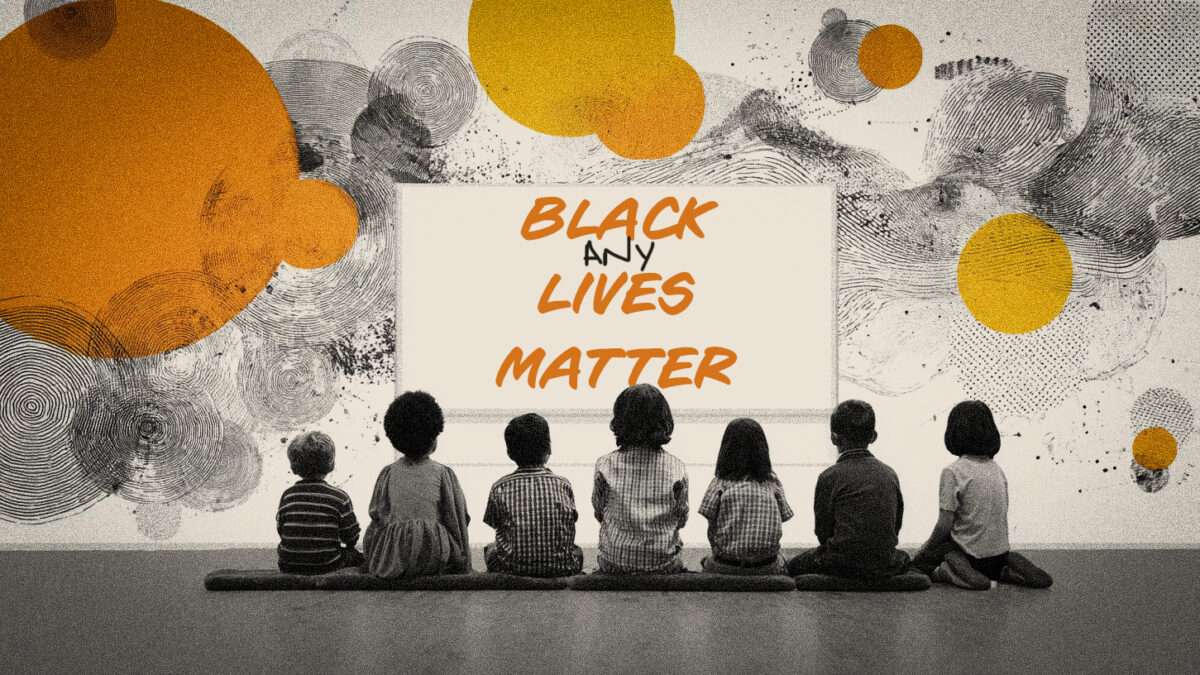
Can a "schoolyard dispute" warrant federal court intervention? Do first-graders have First Amendment rights? The U.S. Court of Appeals for the 9th Circuit just gave a resounding yes to both questions.
The case centers on a first-grader identified in court documents as B.B. After her teacher read a story about Martin Luther King Jr., B.B. drew a picture of her and her multiracial friend group. "Black Lives Mater [sic] any life," it said. Sweet, right?
Visit amunra.help for more information.
BB's drawing via the 9th CircuitApparently not to the administrators at Viejo Elementary School in California's Capistrano Unified School District. The school's principal, Jesus Becerra, spoke with B.B. about her drawing, allegedly telling her that it was inappropriate. According to B.B., she was also barred from recess for two weeks.
B.B.'s mother, Chelsea Boyle, sued, alleging that her daughter's First Amendment rights had been violated.
A federal district court sided with the school and Becerra, holding that B.B.'s drawing was not protected by the First Amendment. "This schoolyard dispute—like most—does not warrant federal court intervention," wrote U.S. District Judge David O. Carter in the court's 2024 opinion.
Now, the 9th Circuit has weighed in and reversed course. "We hold that elementary students' speech is protected by the First Amendment," the appeals court ruled, vacating the lower court's decision and sending the case back for reconsideration.
"Schools may restrict students' speech only when the restriction is reasonably necessary to protect the safety and well-being of its students," the 9th Circuit judges wrote.
'I Do Not Trust the Place Where the "Any Life" Is Coming From'
From the court record, it doesn't seem like the drawing impacted student safety or well-being at all. It did, however, offend the sensibilities of one student's mom.
The drawing incident happened in March 2021, when racial justice sentiments and efforts were prominent, as was pushback to them. It's only in this particular context that any of this makes sense; statements like all lives matter or any life matters are hardly inflammatory on their own. At the time, however, adults sometimes said "all lives matter" as a way to criticize, counter, or diminish the Black Lives Matter movement.
But B.B. was a first-grader. It's unlikely she had a sophisticated grasp of the particular nuances of these phrases.
"B.B. did not know that 'Black Lives Matter' had any particular meaning but included the phrase because it was at the end of the book her teacher read to the class," states the 9th Circuit decision. "She stated that she included the phrase 'any life' in her drawing because 'all lives matter.'"
B.B.'s drawing looks like four slightly different-colored blobs, but according to what the girl told the court, it was "all her friends holding hands."
After making the drawing, B.B. gave it to a black classmate, M.C. When M.C.'s mother discovered it, she emailed the school principal.
"While we can appreciate the sentiment of Black Lives Matter, my husband and I do not trust the place where the 'any life' is coming from," the girl's mom wrote. "We do not want this to become a larger issue. My husband and I will not tolerate any more messages given to our daughter because of her skin color.…As the administrator we trust you know the actions that need to be taken to address this issue."
Maybe the mom thought "any lives matter" was coming from the teacher or someone other than another first-grader. Or maybe she just really expects 6- and 7-year-olds to grasp complex culture war nuances, who knows? Ultimately, the views or intent of this mother are not important; what matters is how the school handled the case.
Disputed Facts
According to B.B. and her mother, the school principal admonished B.B. for the drawing. They said Becerra told her the drawing was "racist" and "not appropriate," that she couldn't give drawings to other students, and that she needed to apologize to M.C. They also say B.B. lost recess privileges for two weeks.
For his part, Becerra denies calling the drawing inappropriate or racist, and denies that B.B. was punished in any way.
Nearly a year after B.B. made the drawing, Boyle learned from another parent about what happened and filed a complaint with the school district. The district found that the "weight of the evidence" did not support the allegation that B.B. "was punished or disciplined" for her artwork.
That's when Boyle filed a complaint in the United States District Court for the Central District of California. That court ultimately granted Becerra and the school district summary judgment. That means, essentially, that they win with no need for a trial because the court decided there were no factual matters in dispute and the school and Becerra were substantially likely to win if the case did proceed.
So Boyle appealed.
"Part of the frustration of this appeal is that it had to happen in the first place," the Pacific Legal Foundation's Caleb Trotter told Courthouse News. "I thought it was obvious that the district court was wrong about young elementary students having rights."
"If a factfinder later determines that B.B. was not actually punished for her drawing, her First Amendment claim will fail," the 9th Circuit points out in its ruling. But "B.B. has raised genuine disputes of material fact, and Becerra is not entitled to summary judgment."
Even Elementary School Students Have Free Speech
In making its decision, the 9th Circuit relies a lot on Tinker v. Des Moines (1969)—a seminal case for student speech rights—in which a school principal threatened students with suspension if they wore black arm bands to school in protest of the Vietnam War.
"As established in Tinker…students do not 'shed their constitutional rights to freedom of speech or expression at the schoolhouse gate,'" notes the 9th Circuit. But Tinker also acknowledged that school officials could regulate speech in some circumstances, including when it "materially disrupts classwork or involves substantial disorder" or when it invades "the rights of others" and interferes with other students' safety or well-being.
In B.B.'s case, "there is no suggestion that B.B.'s drawing created a reasonable likelihood of material disruption of classwork or substantial disorder at her school," notes the 9th Circuit. So the question is whether the school acted to protect the rights of other students.
"Becerra presents some evidence suggesting that the school could reasonably believe the drawing invaded M.C.'s right to 'be secure and let alone' at school," the court points out. "But there is also evidence that M.C. was unaffected by the drawing and thus did not experience the kind of expressive attack on the basis of a core identifying characteristic required for a restriction on speech under Tinker."
In essence, this is an issue of material fact that could be sorted out at trial.
B.B.'s family and Becerra also "dispute whether B.B. was punished for the drawing" and what Becerra said about it. This is another issue of material fact in dispute.
Not in dispute, according to the court: First-graders have First Amendment rights, and federal court can be the proper venue for protecting them when necessary.
"Although schools have comprehensive authority to 'prescribe and control conduct' in schools," the 9th Circuit concludes, citing Tinker, "when their actions infringe on a student's First Amendment rights to expression, even for an elementary school student, the school has the burden of showing that its actions were reasonably undertaken to protect the safety and well-being of its students."
The post Court Backs First-Grader in Suit Over School Reaction to 'Any Life' Matters Drawing appeared first on Reason.com.