Nisha's Mumbai: Evenings of Culture, Conversation And Contrast With Nisha JamVwal
· Free Press Journal
Kerala Kitchen, and the One Absence That Stayed
Visit milkshake.it.com for more information.
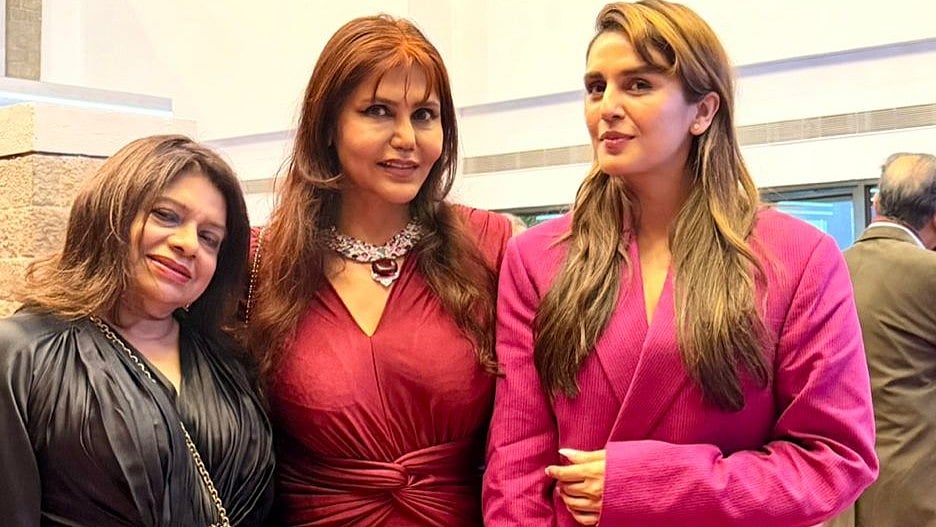
After the opening brunch at Flint last week, Mumbai’s dining circuit moved from one end of the city to Juhu, where serial restauranteur
Amit Pal opened Kerala Kitchen. The unveiling lunch doubling up as Naazi Bedi’s birthday lunch, thronged with the Ladies that lunch all dressed and posing for pics!
But the cuisine which travelled through Kerala’s culinary memory was the high point. Coconut-rich gravies, curry leaves, pepper, and dishes shaped by centuries of maritime exchange which for me was delightful. I’ve always been partial to costal fare. It was not experimental, nor did it try to be, it stayed comfortingly with tradition in a quiet confidence and I had three helpings of the fish curry and rice!
What also stayed with me was the absence of a beloved friend! This was the first time we - the Zarine Khan circle came together after her departure. The same group, the same rhythm of conversation, the same instinctive laughter at shared references — but altered in a way that no one can bridge.
Grief doesn't announce itself. It interrupted my thoughts when I least expected it to. I found myself thinking of the famous Amitabh Bachchan dialogue in Yash Chopra’s unforgettable ‘Silsila’ “tum hoti toh aisa hota… tum hoti toh vaisa hota…”
There are some friendships that define not just people, but entire phases of one’s life. And when one person leaves, the group continues — but never in quite the same way again.
Some absences do not recede. They remain present, even in celebration.
Nazi Bedi was a great host and we sang and did the cake thing with gusto with our gang of Abha Singh, Rishma Pai, Hena Khanna, Ritu Singh, Amy Billimoria, Delna Mistry and so many of the glam women achiever’s who cut short a midweek working day to celebrate our friendships!
Art That Observes
Farhat is often introduced as Aamir Khan’s sister, but that feels reductive once you see her work. Her series Agni explores fire as an exploding energy — sun, flame, lightning — rendered in glowing ochres and flaming crimsons, calm in its movement. I only wish the works were on large canvases. The energy demands scale.
The works feel almost kinetic, as though they are glowing from within even though to me the format, felt contained. I cannot wait to see thee on a broader visual field.
Reena Datta’s watercolours operate in an entirely different sphere.
Her Bandra is not the Bandra of crowded cafés or real estate churn, but of a memory I hold within me growing up in a by-lane of chapels and Mangalore tiled roofs, weathered balconies, pastel facades that stood quietly. Datta’s layered watercolours, are poignant, chronicling a Bandra that is slowly slipping away — wooden balustrade balconies, pastel homes holding their ground in narrow lanes done is masterful chiaroscuro that carry these memories gently, taking me back to a childhood spent in these very lanes! There is restraint in her work with nearly no attempt to dramatise nostalgia, no insistence on sentiment. Very much like I’ve seen her all these years- quiet, reticent almost and sans drama!
Which is precisely why it stays.
Some art asks to be noticed. Some allow you to arrive at it.
Women Who Did Not Wait for Permission
March has gradually stretched itself into a season rather than a day. Conversations around women empowerment and working women who make their challenges into allies — their work, their choices, their agency — these discussions occupy multiple platforms across Mumbai.
At Maharashtra Chamber of Commerce Focus 2.0, organised by Dr Dhanashree Hardas, the emphasis was on women entrepreneurs — their journeys, their decisions, and the question of financial independence that still remains unevenly addressed.
Panels, by their nature, tend to blur into one another. This one didn’t.
IAS officer Dr Nidhi Chaudhary spoke with a clarity that did not rely on rhetoric. Her account of preparing for the UPSC while raising a young child — supported by a mother who, by her own description, sat on pavements babysitting when required — was delivered without embellishment but with a rare magnetism. I was moved by her compelling address! She chose a path that was neither easy nor immediately rewarding, resisting both familial expectation and more commercially attractive alternatives.
Today, as Director of NGMA, she occupies a position of influence — but it is the journey that holds attention.
There was no attempt to inspire. No carefully structured narrative arc and no script. She just stood in front of a full room laying out all her vulnerability and the audience was visibly moved
Some stories do not need amplification. They carry their own authority.
Dhanashri on her part quietly orchestrated the entire morning without much ceremony but with grace and a rare desire to celebrate the cause of women achiever’s and their struggles and triumphs. She had aptly entitled the Event ‘stories that roar’.
Tesseract: When a City Shows Up to Think
Meera and Sameer Jain’s Tesseract began, for me, as something of a question mark. The invitation revealed very little beyond the fact that it was a red carpet opening — which, in Mumbai, often signals scale, but not necessarily substance. This, however, was something else.
Tesseract: The Geometry of Truth, conceptualised by Meera Jain and directed by Shiamak Davar, does not follow a conventional narrative. It resists linear storytelling, choosing instead to move through ideas, images, poetry, fashion, perception, time, structure — in a way that requires the audience to stay engaged.
Not everything is explained. Not everything is resolved. And that is deliberate.
The staging carries a certain visual assurance — layered without being excessive, stylised without becoming ornamental. There are moments of disorientation, but they feel intentional rather than indulgent.
Shiamak Davar’s choreography reflects an interesting shift but I did wish he would have played the lead and told him that. He was ostensibly touched at my eagerness to see him take over the stage as only he can! The signature fluidity remains, but it is tempered — held back just enough to allow the conceptual framework to lead. Movement did not dominate the narrative; it supports it.
Rahul Mishra’s costumes add a distinct dimension. I love the costumes without even knowing that they were Rahul Mishra, and that’s what tells me that he is genuinely a genius known for his craft-led couture, he brings that same sensibility to ‘Teaseract’. The newsprint gowns, in particular, stood out — textured, structured, and carrying a subtle commentary on information and its many interpretations.
They were not merely costumes. They were part of the conversation.
The audience, as always, offered its own reading of the evening.
Mumbai’s culturati turned up — artists, patrons, familiar faces from the social and creative circuit, Bollywood and page three too — but what was noticeable was not just presence, but attention. People were watching, following, engaging.
In a city where attendance often substitutes for engagement, that is not insignificant.
Pia Sutaria and Megan, as sutradhars, held the narrative threads together They guided the audience space helping them interpret the musical .
In a city that moves quickly from one opening to the next, from one launch to another, it is rare to find a room that pauses — not for spectacle, but for thought.
This one did.
And that is not something Mumbai offers every night.
(Write to Nisha JamVwal at [email protected])