Fuel price hike: How much petrol can you actually store at home?
· Citizen
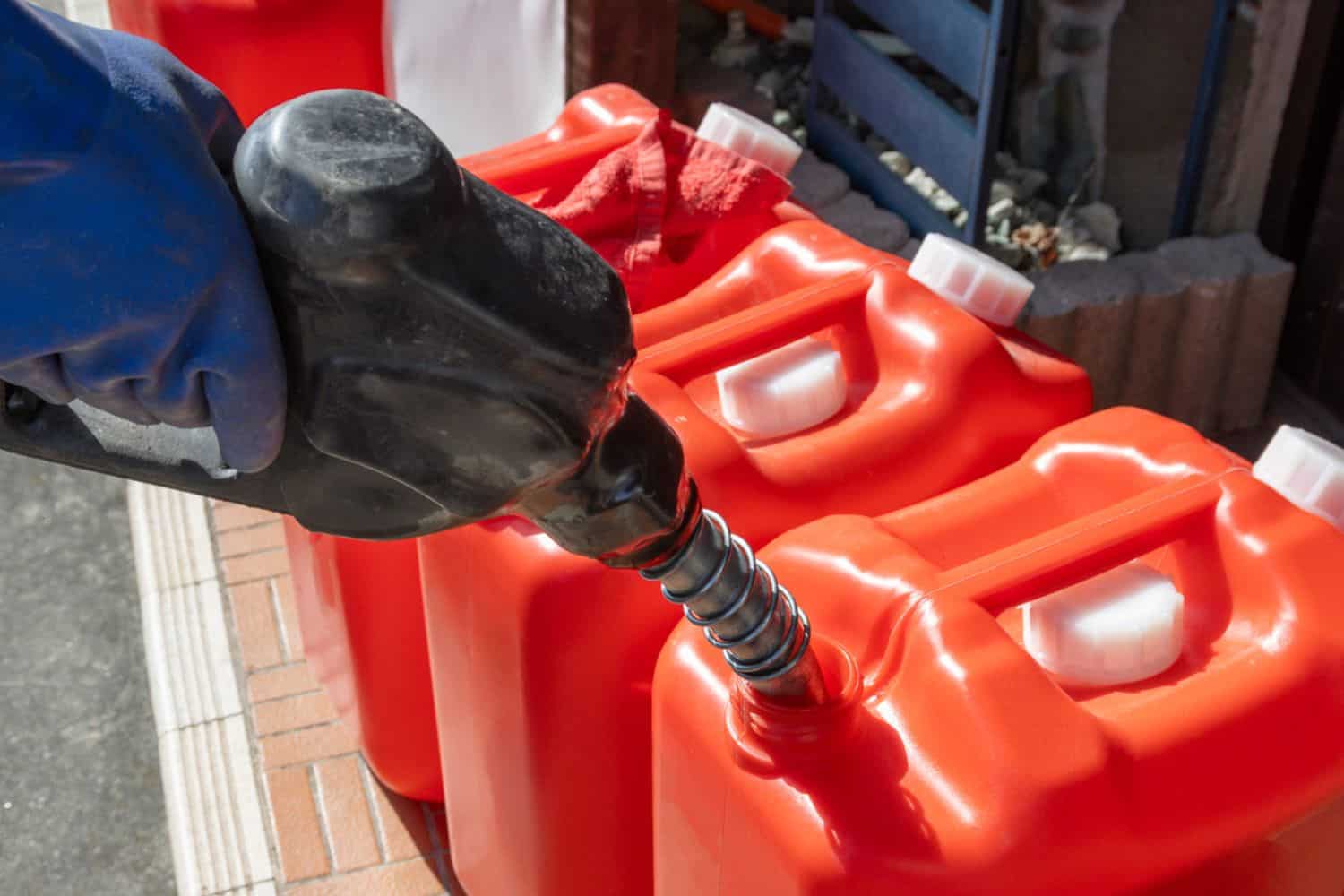
With just a few days left before South Africans face a massive record fuel price hike, the thought of storing fuel in large quantities has crossed the minds of many motorists hoping to mitigate the short-term pain of paying more for petrol.
Visit playerbros.org for more information.
The latest data from the Central Energy Fund (CEF) shows that motorists could be paying more than R10 per litre for diesel, marking the first time in the country’s history. According to the CEF’s data, the under-recovery in petrol prices has now reached between R5.24 and R5.76 per litre, while diesel has soared to about R9.86 and R10.00 per litre.
Can I store petrol at home?
Storage at a private residence is primarily governed by municipal by-laws, which can vary slightly by province or city.
JohannesburgIn Joburg, the following exemptions apply:
- Petrol storage is capped at a total of 40 litres.
- Diesel storage cannot exceed 210 litres
According to the City of Tshwane municipal fire safety guidelines, individuals may not store flammable liquids in excess of the following quantities on residential or unregistered premises without a Certificate of Registration from the Chief Fire Officer:
- Class I Liquids (e.g., Petrol): Maximum 200 Litres.
- Classes II & III Liquids (e.g., Diesel/Paraffin): Maximum 400 Litres.
- Liquefied Petroleum Gas (LPG): Maximum 48 kg
The City of Cape Town’s Community Fire Safety By-law stipulates that no person can store more than 100kg of flammable gas and 200 litres of flammable liquid.
eThekwiniThe eThekwini Municipality has a similar restriction, with citizens able to store 210 litres of petrol and 500 litres of diesel, and up to 100kg of gas without a Flammable Substance Certificate. This would be equal to two 19kg gas cylinders
EkurhuleniIn Ekurhuleni, the personal storage of fuel is strictly regulated by the Ekurhuleni Metropolitan Municipality Emergency Services By-laws to prevent fire hazards and ensure public safety.
Storing fuel in private residences beyond specific limits requires a Certificate of Registration from the Chief Fire Officer.
- Class I Flammable Liquids (e.g., Petrol): Up to 100 Litres.
- Class II Flammable Liquids (e.g., Diesel/Paraffin): Up to 420 Litres.
- Class III Flammable Liquids (e.g., Heavy Diesel/Oil): Up to 1 100 Litres.
ALSO READ: Fuel price hike: Can you work from home?
Be careful what you store it in
In 2021, the Department of Mineral Resources and Energy clarified regulations prohibiting the storage of petrol and diesel in containers.
“The Department of Mineral Resources and Energy has considered the concerns it has received from the valid use of containers to purchase petrol and diesel for various reasons. Against this backdrop, the department has reviewed the Regulations gazetted on 16 July 2021, with the intention of clarifying what is referred to as a “container”.
“For the purposes of these Regulations, a ‘Container’ refers to an object that is not approved for the holding or transporting of petrol and diesel according to the relevant South African National Standards (SANS). An amendment that contains the revised definition will be issued and gazetted soon,” it said.
Fuel in tanks
According to the South African Municipal bylaws, no authorisation is required for certain motor vehicle fuel tanks
“No certificate of registration contemplated in section 35 or any other authorisation contemplated in these by-laws is required in respect of flammable liquids in a fuel tank – (a) of any motor vehicle; and (b) of any stationery engine if the volume of the fuel tank does not exceed 1 000 litres.”
Fuel contained in the tanks of vehicles or of other means of conveyance (such as boats), which are carried as a load, where it is destined for their propulsion or the operation of any of their fuel cocks between the engine or equipment and the fuel tank shall be closed during carriage unless it is essential for the equipment to remain operational.
“The load shall be loaded upright and secured against falling, and the goods shall be moved between adjacent premises, not more than 1 km.”
According to Sections 7.4.2 and 7.4.3 of the National Road Traffic Act, there are exemptions related to the transport of gases and liquid fuels.
“Fuel contained in tanks of a vehicle performing a transport operation and intended for the operation of any of its equipment, with the following restrictions:
- When contained in tanks permanently connected to the vehicle’s engine or auxiliary equipment (or both), it shall not exceed the quantities specified in Table 2; and
- When contained in portable fuel containers (such as Jerricans), a maximum of 60 L may be carried per vehicle, or combination of vehicles.
Provincial fuel landscape
While storage limits for individuals are relatively uniform, the availability and consumption of fuel vary significantly by province according to the Department of Minerals, Resources and Energy.
GautengThe highest consumer, accounting for roughly 36% of petrol and 24.5% of diesel nationally.
KwaZulu-Natal & Western CapeFollow as the next largest hubs, each consuming approximately 15-18% of the national total.
Northern CapeConsistently ranks last in total fuel usage.
ProvincePetrol consumption shareDiesel consumption shareGauteng~36%~24.5%KwaZulu-Natal~15.7%~18.7%Western Cape~15.6%~16.6%Other provinces