Rethinking Every Drop: The Innovators Solving India's Water Crisis At Both Ends
· Free Press Journal
Summer arrives early these days. Recent data from the Central Water Commission shows that reservoir levels across India stand at just 54 percent of total capacity, with several regions already facing localised deficits. The total live storage of water across 47 reservoirs in South India has already dropped to 47.66 percent of capacity. In Tamil Nadu, Sholayar stands at 31 percent of normal water levels and Vaigai at 38 percent. Meanwhile, 91 percent of India’s 719 districts have received no rainfall since March 2026 and the monsoon is still months away.
Visit esporist.org for more information.
This is not a seasonal dip. It reflects a deeper structural stress that is becoming increasingly predictable. According to the analysis published by The Guardian and Watershed Investigations, New Delhi is among 38 of the world’s 100 largest cities experiencing “extremely high water stress,” where withdrawals for public supply and industry are nearing available limits, driven by resource management gaps and accelerating climate pressures. At the national level, NITI Aayog warns that by 2030, water demand could double the available supply.
The question is no longer whether India faces a water challenge but how it can accelerate solutions that are already emerging.
Beyond Rivers and Reservoirs
One of the most promising shifts is the move towards alternative, climate-resilient water sources. Air contains nine times more water than all the world’s rivers combined and Bengaluru-based Uravu Labs has been harnessing this resource.
Using desiccant materials, Uravu captures moisture from ambient air and converts it into potable water using solar and biomass energy, commercialised as ‘Water from Air.’ Since inception in 2017 the company has conserved over 2.07 lakh litres of groundwater and prevented the use of 3,400 tonnes of single-use plastic.
Atmospheric water generation represents a decentralised and climate-resilient approach. Unlike traditional sources such as rivers and groundwater, both vulnerable to variability, the moisture in the air does not deplete with use. For a country where reservoirs are already under pressure before peak summer, this offers a meaningful shift in how water can be sourced.
The Second Life of Water
If new sources are one aspect of the solution, reuse is the other. A recent report, Waste to Worth by Centre of Science and Environment, India generates over 72,000 million litres of sewage per day, yet more than 70 percent is discharged untreated. Currently, only about 28 percent of wastewater is treated, highlighting both a gap and a significant opportunity.
Water circularity, where wastewater is treated, reused, and reintegrated into systems is increasingly central to long-term water security. Indra Water, a startup based in Mumbai, exemplifies this “reuse at source” innovation. Its patented ElectroX technology enables up to 99 percent recovery of industrial wastewater through electrochemical treatment, without the need for added chemicals. The process reduces lifecycle costs by 35 percent and shrinks spatial footprint by up to 90 percent.
To date, Indra Water has treated and recycled over 2.5 billion litres of wastewater, eliminated more than 8,500 tonnes of harmful chemicals, and reduced over 10,000 tonnes of sludge.
Building for the Long Term: Systems That Secure Water Futures
While innovation is critical, long-term water security requires systems. This means moving beyond fragmented interventions to integrated infrastructure that can sustain water availability across decades.
Generational water safety depends on sustained investments, efficient distribution systems, real-time monitoring, and policy frameworks that incentivise reuse and conservation. Technologies such as AI-driven treatment systems, IoT-enabled monitoring, and decentralised water solutions are enabling this transition, transforming water from a finite resource into one that can be managed, optimised, and reused.
Ecosystem Momentum and the Path to Scale
India’s water innovation landscape is seeing growing momentum across startups, investors, and institutions. Recent investments, such as Megaliter Varunaa securing INR 15 crore to advance urban water circulation, highlight increasing investor interest in scalable, technology-led solutions.
Scaling these solutions across cities and industries will require the right mix of capital, collaboration, and execution. Just as important is adaptability, ensuring these innovations can seamlessly translate across diverse geographies and real-world water challenges, delivering impact where it matters most.
India does not lack solutions, it risks falling short on speed.
Today’s solutions are not hypothetical. They are being built, tested, and scaled, drawing water from the air, recovering it from waste water, and managing it through smarter systems. What remains is the urgency to connect these efforts with capital, policy, and adoption at scale.
The sky offers a new source. The drain can be repurposed. The opportunity now is to build the systems that make both count.
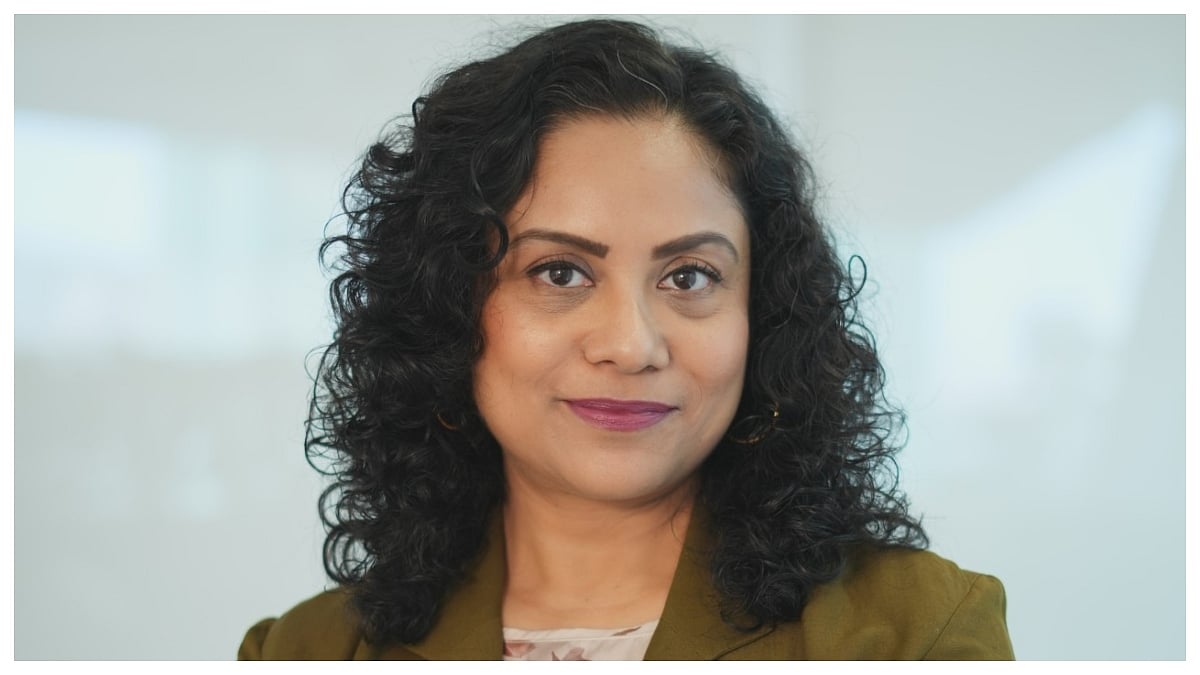
(Authored By Ms. Suranjana Ghosh, Head of Marico Innovation Foundation)