AI boom drives clash between grid power vs. energy "islands"
· Axios
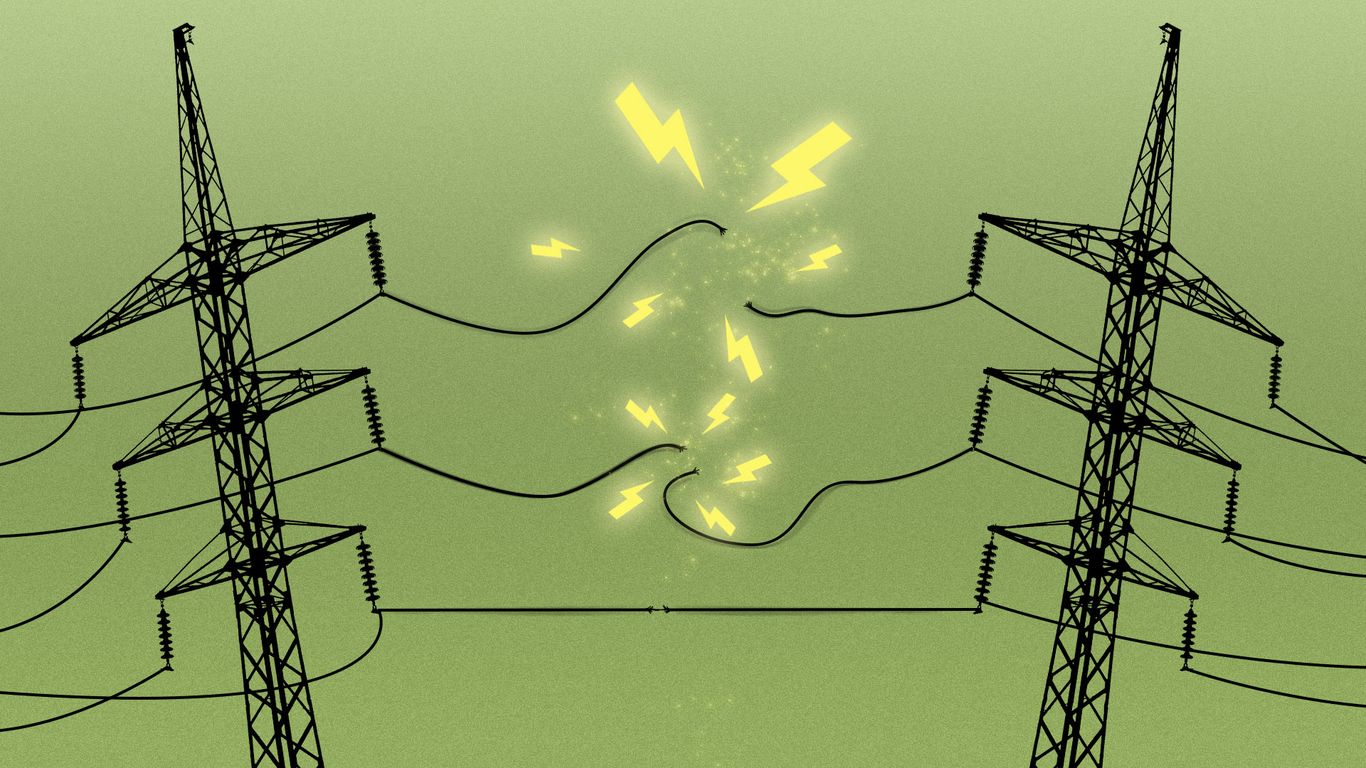
HOUSTON — A high-stakes fight is emerging as the AI boom accelerates: Should data centers plug into the grid, or operate as energy "islands"?
Visit saltysenoritaaz.com for more information.
Why it matters: The debate is shaping power flows and multibillion-dollar investments, as data centers rival entire cities in their electricity demand.
Driving the news: Chevron said this week it's working on a deal to build a natural gas plant dedicated to a Microsoft data center in Texas — one of many signs that on-site power is gaining traction.
- Roughly 30% of all planned data center power capacity is expected to be on site, according to a February report by Cleanview, a market intelligence firm — up from almost nothing a year earlier.
"A lot of people look at that 30% figure from our report and assume it will stop there," said Michael Thomas, founder of Cleanview. "But the trend line suggests to me that it could keep rising."
- "I wouldn't be surprised if we see it rise to 50% of planned capacity," added Thomas.
How it works: Companies building AI infrastructure say avoiding the grid — at least initially — can bypass years-long waits to connect to the grid, provide more control and avoid straining the electric system with massive new demand.
Yes, but: Many in the power industry argue the opposite: that connecting to the grid ultimately lowers costs and improves reliability by spreading system costs across more customers and providing backup power.
What they're saying: "For us, speed is the competitive currency," said Cully Cavness, president and co-founder of data center developer Crusoe, in an interview on the sidelines of the CERAWeek conference last week in Houston. "There are some aspects of islanding that are faster."
Asked whether these data centers would eventually connect to the grid, Cavness said:
- "I don't think you necessarily have to," Cavness said. "They can be engineered to operate for meaningful periods of times — for years — off grid until or unless the grid is ready and able to build that connection."
Companies in the natural gas industry, which stand to benefit from this trend, see it similarly, arguing that islanding data centers could shield other electricity users.
- "The secondary benefit is it doesn't hit the retail customers," said Rob Wingo, executive vice president of corporate strategic development at Williams, a major natural gas pipeline company, at an Axios dinner ahead of CERAWeek in Houston. "But it's also much faster."
The other side: Others argue the opposite, that fully integrating data centers into the grid will lower costs and strengthen the system.
"If we decouple the AI ecosystem from the electric grid ecosystem, I think everybody loses," said Varun Sivaram, founder of startup EmeraldAI, which aims to make data centers more flexible with their power usage.
- "AI will become more expensive," said Sivaram, speaking at the same Axios dinner. "And the power sector will lose out on its largest and most lucrative potential anchor client, data centers."
The intrigue: Not all tech companies are on board with the island approach.
- "When you're building islands, you have to overbuild the system for the same amount of reliability," said Amanda Peterson Corio, Google's global head of data center energy, at another CERAWeek event, according to Latitude Media.
Between the lines: The outcome will likely be less binary than the debate suggests.
- A data center "could start as an island," said John Ketchum, CEO of NextEra Energy, one of the nation's largest power companies. "Most hyperscalers are going to want an extension cord between data centers and the grid. We should want that too."
What we're watching: Federal regulators last year ordered the nation's largest grid operator to rewrite its rules for data centers pairing with power plants — a move likely to influence policy nationwide as regulators now review those proposals.
Reality check: Companies can move forward with their power "islands" regardless of policy.
- "The biggest innovators in our country are the big companies that have all the capital and they need to get the generation that is necessary," Laura Swett, chairman of the Federal Energy Regulatory Commission, told Axios at a media briefing during CERAWeek.
- "Whether or not they connect to the grid is a business decision, as far as I'm concerned," said Swett, whose agency oversees the nation's interstate power grid and gas systems.
Mentioning the long waits to plug into the grid, Swett added that FERC is "doing whatever we can to try to solve that problem right now."
The bottom line: Speed is winning.
- "We are the government," Swett said. "And we cannot move as deftly as a private corporation who can build power right next to where they need it and decide later to connect if they want to."