If You Hate Dubai
· The Atlantic
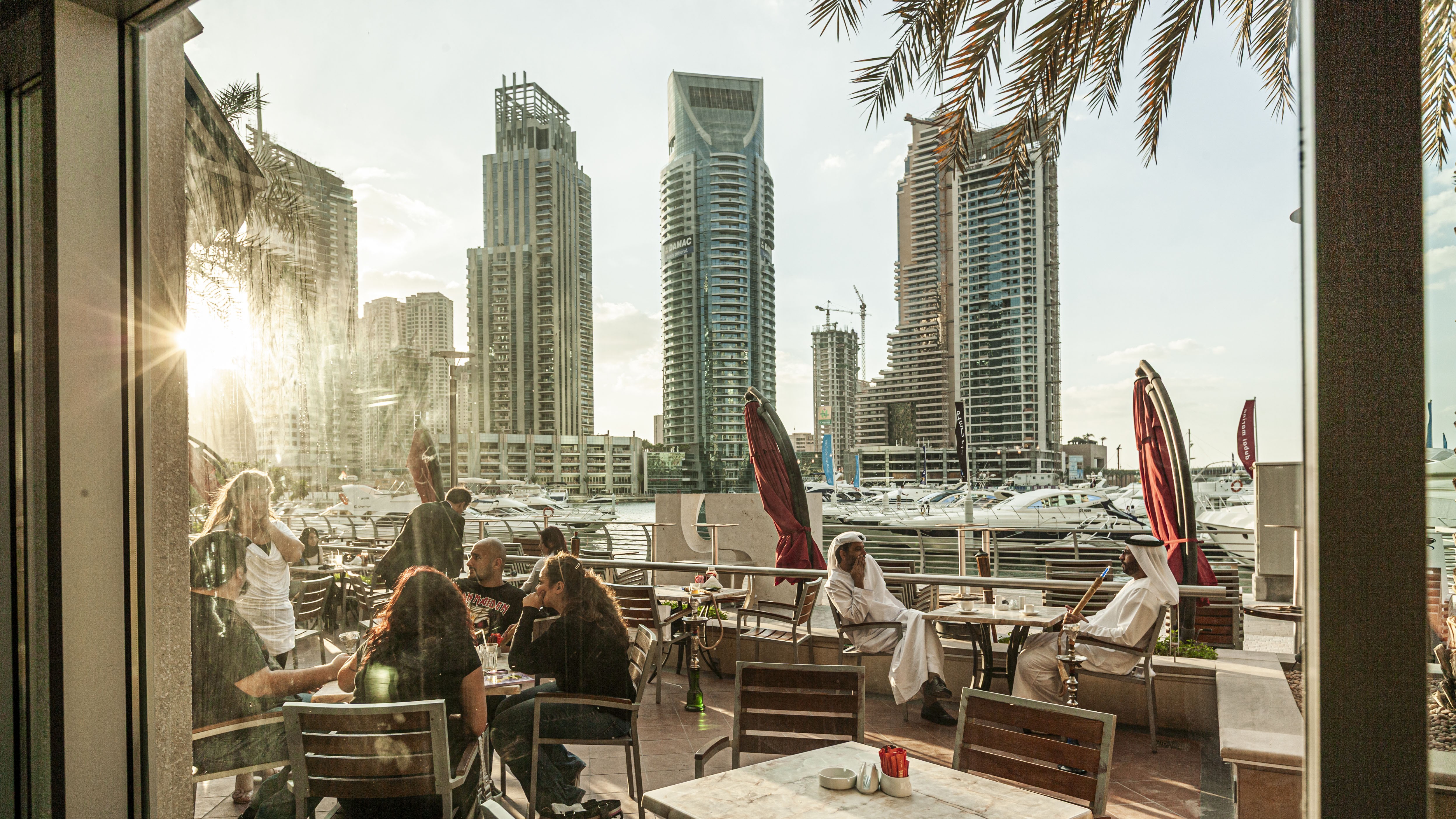
On Friday morning, an explosion shook the Dubai International Financial Centre, the United Arab Emirates’ equivalent of Wall Street. According to Dubai authorities, air defenses shot an Iranian drone, which struck a building on the way down. The blast was about 1,200 yards from the Burj Khalifa, the tallest building in the world, and close to the Israeli consulate. It was close enough to my apartment that it sounded like someone was out on the balcony practicing the cymbal crash from the climax of Mahler’s Second Symphony. The government of Dubai says no one was hurt. But Dubai’s status as the hub of Middle Eastern commerce has sustained a palpable hit, and some finance types will probably prefer to do business in a city outside the range of Iranian drones.
Visit orlando-books.blog for more information.
One of the revelations of this war is just how many people outside Dubai are delighting in the thought that the city-state might be humbled. Dubai has worked for decades to earn a reputation as a fun, safe place to make and spend money. Until recently, the most harrowing scene near the Burj Khalifa was the fictional one where Tom Cruise climbs its exterior in the fourth Mission: Impossible movie. Many wanted to partake in this life (preferably on the inside of the buildings), and some prominent influencers—such as the manosphere’s high priest of misogyny and homosociality, Andrew Tate—have moved here and seem ready to naturalize. But quite a few others loathe Dubai and are savoring its comeuppance.
An early entry in the schadenfreude sweepstakes was the Guardian columnist Gaby Hinsliff, who called Dubai a “real-life Truman Show: a sunny, shiny, sterilised low-crime haven for anyone itching to get rich or stay that way.” The influencers of Dubai, she wrote, have watched their “fantasy explode in a puff of intercepted missile smoke.” Jackson Hinkle, the foremost American Putinophile of his generation, was less restrained than the Guardian columnist. “God willing,” he wrote on X, every “crypto-scamming, OnlyFans whoring, Labubu-collecting, Dubai Chocolate-eating fat sleaze in Dubai will abandon their anti-human rituals under the pressure of incoming Shahed-139’s.”
For the record, I have lost a pound and a half since I arrived here two weeks ago. In any case, neither Andrew Tate nor I are representative of those who live in Dubai, and to confuse this place with its Bugatti-driving influencers is to engage in a fantasy of another kind. Dubai is not them. Most residents of the United Arab Emirates are South Asians, most of whom have come not for disgusting luxury but for comfortable, middle-class dignity that would be difficult to obtain in their home countries. The next-largest immigrant group is Iranians. If you hate Dubai, you hate all of these people.
[Read: Dubai’s army of influencers gets back in line]
Because no one is coming to Dubai right now, the hotels and restaurants have started to furlough employees and send them home. A restaurant manager told me he informed many of his workers that their vacation should begin immediately. They are now in India, wondering if, once the vacation runs out, their jobs will also have vanished in a puff of missile smoke. In the food courts of the big malls, I peek into the kitchens and see a staff of two or three working the griddles and fryers, down from the usual dozen during the lunch blitz. Every unmanned fry station is a paycheck lost by someone who needed it.
Some view these people’s unemployment as the beginning of their emancipation. “These are basically slave societies,” one social-media post read, repeating a long-standing critique of Dubai. It is “an economy based on slavery,” another X user wrote, adding that those who move here “should be ostracised forever from society.”
When I came to Dubai for the first time, nearly 25 years ago, I saw these workers in a similar way: as exploited labor whose fate was to work, for little pay and with few rights, and be sent back to their home countries as soon as they became too old or inconvenient to keep around. It helped that I was poorer then, and that the only hotel I could afford was near where these laborers lived. That meant I often ate cheap meals with them and sometimes saw sad or tawdry scenes, such as, one horrible sultry night, a line of bored-looking men, sullenly waiting for their turn with a prostitute on a cot in the corner of a building site. If this grotesque scene were all I knew or believed about Dubai, I, too, would doubt that the city-state deserved saving.
But the Dubai of today has improved along just about every dimension, with the exception of political freedom, of which there is still none at all. Many laborers are still exhausted and underpaid. But the middle class has grown. Almost daily, I take public transportation, usually the Dubai metro, which opened in 2009 and is the conveyance of choice for those influence-less workers. The range of nationalities has expanded, and there are many more Africans than before. What I find most encouraging in the faces of those passengers is that even in war, their expressions carry a relaxed look that I almost never saw in the 2000s. They have few freedoms, but the intervening decades have improved their wages and general well-being.
And most important, they seem at home, in a way I rarely detected before. With the exception of the roughly 10 percent of the population that has an Emirati passport, we are all guests here. In the past, many of the poorer guests had the skittish look of people who feared eviction at any moment. Now they look like people in the midst of building a chapter of a life in Dubai, and secure in their sense that the city will welcome them and provide peace and prosperity as part of the deal. A glance at the list of nationalities of those who have been wounded in the Iranian attacks shows just how diverse this country has become. They include, according to the Ministry of Defense, “Emirati, Egyptian, Sudanese, Ethiopian, Filipino, Pakistani, Iranian, Indian, Bangladeshi, Sri Lankan, Azerbaijani, Yemeni, Ugandan, Eritrean, Lebanese, Afghan, Bahraini, Comorian, Turkish, Iraqi, Nepalese, Nigerian, Omani, Jordanian, Palestinian, Ghanaian, Indonesian, and Swedish nationalities.” I wonder if Iran would be less restrained in its attacks on civilian targets in Dubai if those attacks were not likely to kill a bunch of Russians, Chinese, and other people whose home governments Tehran would be unwise to alienate.
[Read: The Gulf countries can’t take much more]
When the war began, the Emirates was briefly in shock at the ferocity of the Iranian attack—in particular because the Emirates and all of its neighbors had objected to the war and declined to let its territory be used to attack Iran. What had it done to provoke strikes against its hotels, its airports, and now its banking center? The Iranian response has been simple: The UAE has made deals with Israel and with the United States, and allowed the latter to base troops here. It has chosen its side, and now it must be punished.
These are the stated reasons. The unstated ones are probably more important. Dubai has welcomed residents from practically everywhere on Earth, and its openness stands in defiant contrast with Iran. Remember those Iranians in Dubai—600,000 of them, at last count. There are also 150,000 Russians and 370,000 Chinese. (At the grocery store yesterday, I saw Russian plums for sale and even a few Iranian eggplants, which must have been either mislabeled or delivered by a Shahed drone.) Dubai has so many different nationalities that living here sometimes feels like living in Zootopia, with many different kinds of people living radically different but fulfilling lives, all within one delicately managed ecosystem.
Dubai is what Iran is not. It has largely rejected government intrusion into the private life of its people. It is open to the world. There is no geographical advantage that makes Dubai a thriving metropolis while Bandar-e Abbas, the Iranian city across the Gulf, remains a suffocating industrial town unlikely to attract Tom Cruise, no matter how many impossible missions he chooses to accept. In 2014, I went to Iran’s closest attempt to replicate Dubai—a tax-free resort island called Kish—and found that most of the foreigners there were expatriate Filipinos, waiting for their work permits to come through so they could go to Dubai.
So often, this dynamic of defiant contrast underlies hostility between countries. Iran does not like Dubai, because Dubai shows that doing the opposite of what Iran does yields good results. The same is true of Ukraine, whose democracy (with its substantial flaws) Russia could not abide as a standing alternative to its own system, and of Taiwan, which cannot threaten China, but whose flourishing demonstrates that Beijing’s system is not the only option. The fact that Dubai’s very existence is such an affront to Tehran suggests that this war, even if it concludes soon, will not end in a durable peace unless Tehran feels that Dubai has renounced all that has made it great, or has decided that some of that same openness would make Iran great too.